|

Carbon Monoxide,
or CO, is a byproduct resulting from the incomplete combustion
of fuels such as natural gas, propane, heating oil, gasoline,
kerosene, coal and wood, just to name a few. In the home,
appliances utilizing these fuels such as furnaces and boilers,
portable heaters, cooking appliances, clothes dryers, fireplaces
and heating stoves can produce significant levels of CO. Even exterior appliances such
as charcoal and gas grills, stand-by electric generators and automobiles
can be a potential source of Carbon Monoxide inside your home.
Commonly called
the "silent" or "invisible" killer, Carbon Monoxide is an
odorless, colorless and tasteless gas. Short-term exposure to high-enough
levels of CO (CO
poisoning) can cause symptoms such as dizziness and confusion, nausea and
vomiting, weakness and chest pain, just to
name a few. Long-term health effects can include tissue and
neurological damage, and in high enough concentrations and exposures, death. Each year in the United States, CO
poisoning claims hundreds of lives, and several thousand more
victims require medical attention. Numerous other untold victims
are poisoned but do not realize it because of the undetectable
nature of CO, and how the symptoms of CO poisoning mimic other
ailments such as the flu.
Some groups such
as neonates, infants, and people with chronic heart disease,
anemia and respiratory problems are more susceptible to the
effects of CO poisoning. However, anyone exposed to high-enough
levels of CO are at risk for poisoning. In many documented
cases, people have died from CO poisoning in their sleep, some
of which never experienced any symptoms at all.
Carbon Monoxide
is easily absorbed into the bloodstream via the lungs where it
readily attaches to the hemoglobin in the red blood cells. The
hemoglobin is the part of the red blood cell that transports
oxygen from our lungs to our cells, and returns carbon dioxide
for expulsion. Amazingly, hemoglobin will accept Carbon Monoxide up to
200 times more readily than oxygen, thus inhibiting
the blood's ability to carry oxygen to the body's tissue and
cells. In addition, because of Carbon Monoxide's ability to bind
to hemoglobin, CO is slow to be expelled from the body, making
it a very serious health threat.
On this page, we
will discuss how to prevent Carbon Monoxide problems, Carbon
Monoxide alarms, and what to do if a
Carbon Monoxide incident arises.

 |
| |
Fuel-burning appliances such as furnaces and hot
water heaters might produce Carbon Monoxide if not
serviced appropriately. |
Many homes now
feature very efficient insulation, doors and windows which keeps
air from getting in, and out. This obviously means that should
you get Carbon Monoxide in your home, it will have a difficult time exiting
naturally. This same air-tight condition can also help produce
Carbon Monoxide, as a flame that has less than adequate oxygen
for combustion will produce CO. A good first step in helping to
prevent a CO problem in your home is to have a qualified
technician annually inspect and maintain all fuel burning
appliances, and their ventilation systems, irregardless of if they
are gas or oil-fired.
When neglected,
gas and oil-fired appliances such as furnaces, boilers, hot water heaters,
clothes dryers, cook tops, ovens, gas fireplaces and their
associated ventilation systems are prime sources for Carbon Monoxide. In
addition, their inefficiency resulting from needed maintenance costs you money and in
the case of fuel oil furnaces, can lead to "backfires" that will
leave your house filled with a greasy, black smoke which stains
walls, ceilings and other parts of your interior. Be sure to
have these systems serviced annually by a qualified technician.
 |
|
Proper
installation and maintenance of all ventilation
systems is critical. This includes all rigid and
flexible duct work, chimneys and exterior vents. |
|
It is also very important to
make sure that all exhaust is being properly vented to prevent
CO from finding it's way into your home. Both rigid and flexible
ductwork which is used to vent these appliances is prone to
dislodgement and damage. Repairing ductwork may seem
like an easy enough task for a do-it-your-self'er, but be
warned, making a mistake here could be deadly. Be sure to ask
the technician servicing your appliances to also inspect their
ventilation systems.
Remember, duct
work from wood, coal and pellet stoves should also be installed
and maintained by a professional. Fireplace doors and fireplace
inserts will also allow CO into the home if they are not
installed correctly.
Homeowners would
also be advised to leave the repair and replacement of furnaces,
boilers, hot water heaters, etc., to a qualified professional. Exterior vents
for interior gas and oil appliances must be installed properly.
Intake and exhaust vents which are placed in proximity to each
other can re-circulate emissions, introducing Carbon Monoxide to
the home instead of safely disposing of it.
While we are on
the subject, have your chimney inspected and cleaned each year.
Cracks or damage to the chimney flue can serve as an avenue for
CO to invade your home by. Bird's nests, creosote buildup, and other debris can keep the
chimney from functioning properly, allowing CO to back-up into
your home. In addition, excessive creosote deposits lead to
chimney fires, so get them cleaned.
 |
| |
Kerosene
heaters have the potential to cause fires and
produce carbon monoxide. Always follow the
manufacturer's instructions for their use and
maintenance. |
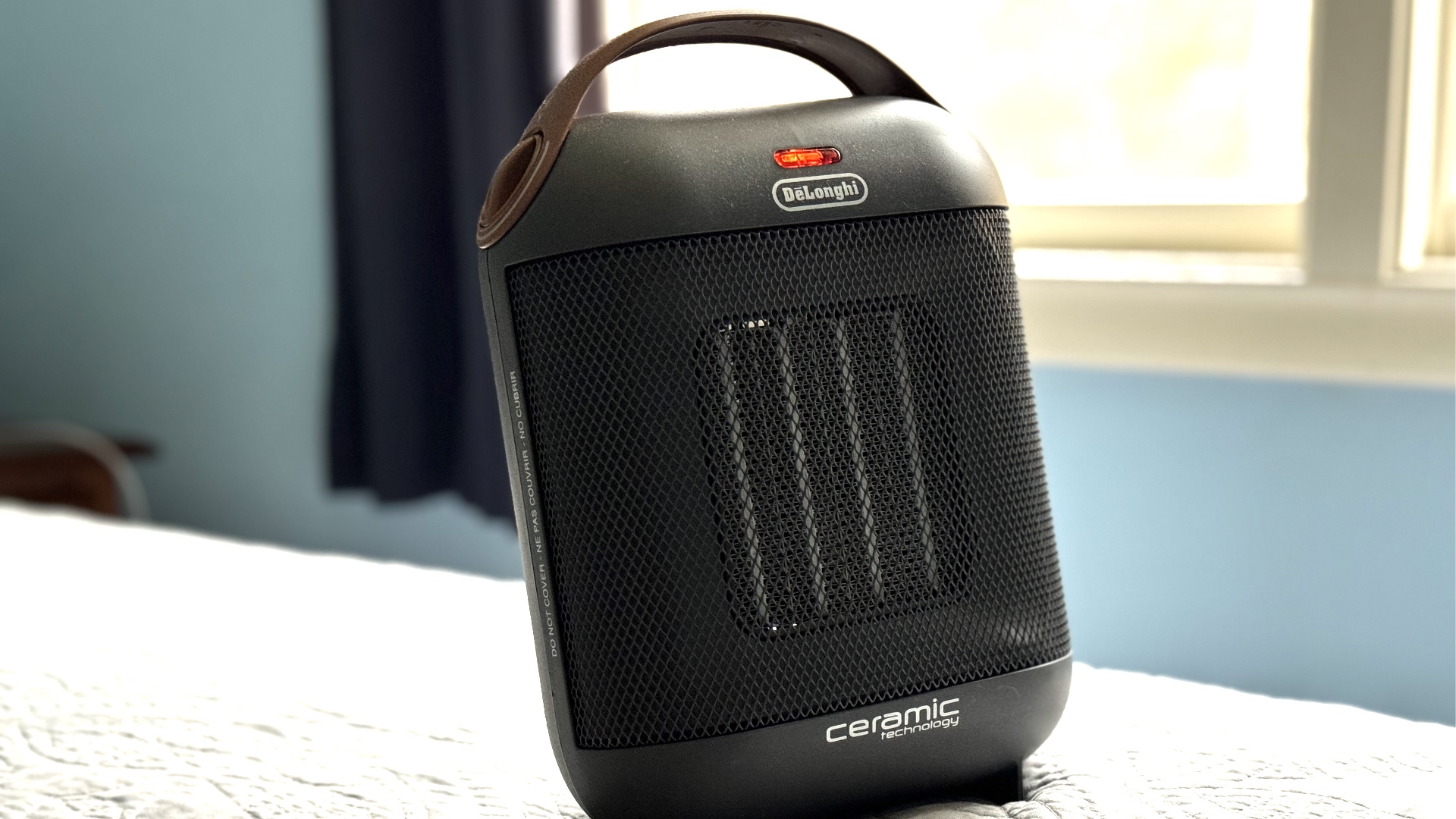
Another CO
producing appliance that is used for heating is natural gas,
propane and kerosene space heaters. Some of these heaters are
permanently installed and require venting to the exterior like
other heating appliances. All of the maintenance concerns
associated with the before mentioned heating appliances also
applies to space heaters.
Portable space
heaters normally are not designed to vent to the exterior of your
home, although consideration must still be given to ventilation,
such as opening a window partially. Maintenance must be
performed on these appliances also, as even an improperly
trimmed wick
can significantly increase the level of CO produced by these
types of heaters.
Although
manufacturers certainly design portable gas heaters to be as
safe as possible, they are still a potential source for CO and a
fire hazard. This has led some jurisdictions to ban their use.
Check to make sure that the use of these types of heaters are allowed
in your area, and by all means read, understand and strictly
follow the manufacturer's instructions for their use and
maintenance.
During a winter
power outage, it is tempting to use outdoor charcoal and gas grills,
and camping stoves, heaters and lanterns for heating and
lighting the home. This is an incredibly dangerous practice as
these appliances can produce a large amount of Carbon
Monoxide, and are also considerable fire hazards when used
indoors. Using your gas oven, range or cook top for heating
the home can also produce a significant amount of CO.
Another warning
about power outages:
Never run a portable electric generator
inside the home, inside THE GARAGE, OR CLOSE ENOUGH TO THE HOME
OR IN A MANNER THAT MAY ALLOW EXHAUST AND carbon monoxide TO
ENTER.
 |
|
Never
operate a portable electric generator inside your
home. Position them as far as possible from the
structure to help reduce the possibility of
introducing Carbon Monoxide to the interior. |
|
These units are not designed to run inside the
home as they produce considerable Carbon Monoxide. There have
been many documented cases of deaths from CO poisoning resulting
from the running of portable electric generators inside the home
during power outages, so do not do it. Strictly follow the
manufacturer's instructions when using portable electric
generators.
Renters should be
just as concerned about Carbon Monoxide as homeowners. Speak
with your landlord about their preventative measures concerning
CO. Landlords have a legal obligation to annually service gas
and oil appliances, and provide renters with a safety certificate
upon request. Also talk to your landlord about installing a CO
detector if none are present, as this is commonly also required by
law.
Carbon Monoxide
doesn't always necessarily originate from inside your home.
Common sources of CO from the exterior of your home are
automobiles, gasoline-powered lawn tools, electric generators, and
charcoal and gas grills. CO from these and other sources can
find its way from the exterior to the interior of your home,
and there are several scenarios that you should be aware of.
 |
| |
Garages
can trap the exhaust of automobiles, lawn tractors,
snow blowers, generators and other fuel burning
implements, and facilitate the introduction of the
CO they produce to the interior of your home. An
open garage door does not offer adequate
ventilation. Remove these implements completely from
your garage when they are running. |
With many homes
now having attached garages, it is not uncommon for CO to
originate in the garage, and migrate to inside the home. During
inclement weather,
it is a common practice for people to warm-up automobiles,
tractors, and snow blowers, run portable electric
generators or use grills, inside the garage. What happens is when the door from the garage to the interior is opened,
a large influx of Carbon Monoxide can be introduced to the
interior of the home driven by wind or pulled along when colder
air rushes into the warmer interior of the home.
Remove
automobiles, tractors, snowmobiles, etc. from the garage
immediately after start-up and idle them outside of the garage,
and close the doors afterwards to prevent CO from entering the
garage while they idle. Start lawn mowers, gasoline-powered tools,
etc., outside and away from the garage and leave them there. Do
not use grills or portable electric generators inside the
garage. Using any of these items inside the garage, whether it
is attached to the home or not, is an unsafe practice regardless
of it you have the garage doors and windows open for
ventilation. The normal circulation of air will not provide
enough ventilation.
Using items such
as grills, lawn tools, pressure washers and electric generators
in proximity to open windows, doors and vents can certainly also
introduce CO to inside your home from the exterior.


Even with
excellent preventative measures, a Carbon Monoxide incident can
still occur in your home at any time. Unless you have a properly
functioning CO alarm (previously known as CO detectors) installed in your home, it is virtually
impossible to determine the presence of Carbon Monoxide.
Remember, CO is an odorless, colorless, tasteless gas, so a Carbon
Monoxide alarm is a wise, inexpensive and essential
investment in your family's safety.
 |
|
Carbon
Monoxide alarms designed for wall and ceiling
mounting. The unit on the right is a combination
CO & smoke alarm. |
|
Carbon Monoxide
alarms are similar in appearance to smoke alarms and
protect you in a similar manner. When functioning properly, they
constantly monitor the atmosphere inside your home for the
presence of CO, emitting a warning when a specified level of
Carbon Monoxide is detected. It is important to note that while
some CO alarms may have a similar appearance to smoke
alarms, unless the unit is specifically designed to detect
smoke in addition to CO, do not utilize it as a smoke alarm.
In fact, there
are several brands and designs of CO alarms available. As
mentioned, some alarms are dual-purpose, working to detect
Carbon Monoxide and smoke. Some units feature a digital read-out
of the level of CO in the atmosphere.
The consumer also
has several options regarding how the unit is powered. Battery
operated units are popular but require the owner to annually
change the batteries to keep them in continual operation. Some
units are powered by replaceable modules which are good for
several years. The drawback to these alarms is availability
of the modules. Other units are designed to be plugged into a
wall outlet or hard-wired directly to a 120 volt connection. If
you purchase a wall-plug or hard-wire model, make sure that it has a
battery back-up so the alarm continues to function during
power outages. Never connect a plug-in unit to an outlet, or
install a hard-wired detector to a circuit that is operated by a wall switch. It is imperative that you promptly change the
batteries when recommended and/or needed for those models that use them, regardless
if the battery is the primary or back-up power source.
Make sure the
unit you purchase has been approved by an independent testing
company, such as Underwriters Laboratory (UL). Regardless of
which model you purchase, for the unit to effectively protect
you and your family, you need to:
FULLY READ AND
UNDERSTAND THE MANUFACTURER'S INSTRUCTIONS REGARDING THE
PLACEMENT, MAINTENANCE AND USE OF THE CARBON MONOXIDE ALARMS.
 |
| |
A wall
outlet plug-in style Carbon Monoxide detector. |
Most Carbon
Monoxide alarms are designed to be mounted on the ceiling or
wall,
unless the manufacturer
instructs otherwise. The ceiling is a common choice for mounting
because CO is slightly lighter than air, and is
usually associated with warm air, so it tends to
rise. In addition, mounting the unit on the ceiling helps to
keep it out of reach of tampering, and protects it from
unintentional damage. However, some literature suggests that CO
will distribute relatively evenly from the floor to the ceiling,
so some manufacturers recommend wall mounting their detector, as they
may be designed to work in that configuration. Always follow the
manufacturer's recommendations, and avoid placing an alarm in
areas which the manufacturer warns against. Some of these are
listed below. Never paint a CO alarm.
Where to locate a
CO alarm(s) depends on the amount of units you decide to
purchase for your residence. If installing only a single unit,
the Consumer
Product Safety Commission recommends placing the unit in the
area outside the bedrooms. This is an excellent recommendation
for several reasons. Furnaces, a common source of CO, operate
more frequently during the night when people are sleeping.
During a prolonged period of sleep, you will be unaware of the
onset or worsening of any symptoms, and your ability to awaken
and be conscious could be significantly degraded because of the
long exposure you might suffer unaware during sleep. Depending on the
level of CO poisoning your are suffering, an alarm which is
sounding distant from where you are sleeping might not be able
to wake you in your condition.
If you are going
to place multiple alarms (which is recommended), there are
several considerations regarding placement, dictated again by
the amount of units you are willing to invest in. Consider
placing one alarm in each bedroom. One alarm on each floor
is another good option. It is a good idea to place an alarm in
the vicinity of any gas or oil-burning appliances, although one
alarm on each floor should provide adequate coverage, unless
you have a larger-than-average sized home.
There are
definitely some recommendations on where not to place a unit. Do
not place a Carbon Monoxide alarm immediately above or
adjacent to any fuel-burning appliances. Normal use of these
appliances is sure to emit some CO into the immediate
atmosphere, even with proper ventilation. In addition, a short
burst of CO may be produced by these appliances on start-up.
Follow the manufacturer's suggestions regarding the distance
their alarm should be placed from these appliances.
Other locations
to avoid placing a CO alarm are:
 |
Areas
subject to high humidity such as near showers or saunas.
|
 |
In unheated
basements, attics, or where they will be directly
exposed to weather. |
 |
Where they
may be exposed to chemical solvents or cleaners, and
aerosols, such as paint thinners, hair and deodorant
sprays, etc. |
 |
Near forced
or unforced air ventilation openings, flues and
chimneys, and areas of turbulent air such as ceiling
fans. |
These situations
can greatly increase the chance that your CO alarm will give
you false indications, or no alarm when CO is actually present.
Another situation
you should be aware of is any place that is excessively dusty or
dirty. For example, an unfinished basement probably is not the
cleanest room in the house, and commonly serves as workshop for
the homeowner. Wood dust from sawing and sanding, and airborne
particles from spray guns could foul the alarm. These
conditions are not just limited to the basement. A remodeling
project in a bathroom or bedroom might produce dust from drywall
sanding and airborne particles from a paint sprayer.
This should not
keep you from placing a CO alarm in the basement, and you
probably have one somewhere near the bedroom. You just need to
be aware that this condition can cause false indications, or ruin the
alarm. It is highly advised that you temporarily remove
and protect the CO alarm during a dust condition, and
promptly reinstall it when the condition has abated.
 |
|
Testing
your unit
and changing the batteries are essential if you
expect your CO detector to protect you. |
|
A few last words
about Carbon Monoxide alarms. Like any other device they have
a finite life and must be replaced. Consult the manufacturer's
instructions regarding the operative lifespan of your alarm.
Many alarms have an expiration date printed on them.
Don't forget to
test your Carbon Monoxide alarm once a month with the unit's
test feature. Do not self-test your unit by trying to produce CO
with a cigarette, candle, or other similar manner. Besides the
danger the open flame presents, you could very easily damage
your unit without even knowing it. Some manufacturers
recommend gently vacuuming the alarm periodically.
Remember to replace the
batteries at least once a year, or per the manufacturer's instructions.


While any Carbon
Monoxide incident is serious and should be treated as such, the
recommended response is dependent upon whether the source of the
problem is obvious or not, and if occupants are feeling ill or
not. First and foremost:
TREAT EVERY
ACTIVATION OF YOUR CARBON MONOXIDE ALARM AS AN EMERGENCY AND
NEVER IGNORE AN ACTIVATION OF YOUR ALARM.
Should your CO
alarm activate, immediately begin to assess the situation.
Things to think about are:
 |
Is the alarm
sounding a warning, or is it a low-battery chirp?
|
 |
Is there
something obviously present that could be causing a
false-alarm? |
 |
Is anyone
felling ill? |
 |
Is the
source of the CO obvious or not?
|
IF YOUR CARBON
MONOXIDE ALARM ACTIVATES AND ANYONE IS EXPERIENCING SYMPTOMS
OF POISONING, IMMEDIATELY MOVE OUTSIDE TO FRESH AIR AND ACTIVATE
AN EMERGENCY RESPONSE FROM A PHONE OUTSIDE THE HOUSE.
CO alarms are
designed to give different warnings so the homeowner can easily
differentiate between an actual alarm, and a low-battery
situation. If you are receiving a low-battery indication, place
fresh batteries in the unit and reset the alarm in accordance
with the manufacturer's instructions.
It is quite
possible that your are getting an alarm indication and there is
no Carbon Monoxide present. Dust, humidity, steam and other
conditions can cause false alarms. If you are positive that you
have identified a condition causing a false alarm, try to
rectify the condition and reset the alarm. You may need to
temporarily move the unit to fresh air to help reset it.
Consult your owner's manual regarding this.
In some cases,
the source of Carbon Monoxide may be obvious. For instance, all
your appliances use electric except for the oil-fired furnace,
which has been running constantly on a very cold day. Or maybe
your power-washer has been running near an open door while you
have been cleaning your deck.
Your first step
should be to immediately evacuate the house of all occupants,
including the pets. If anyone appears to be suffering from CO
poisoning, immediately activate an emergency response. Do not
use the phone from inside the residence.
THE ABSENCE OF
CARBON MONOXIDE POISONING SYMPTOMS DOES NECESSARILY INDICATE THE
ABSENCE OF CARBON MONOXIDE.
Turn off the
source of the CO, or work to rectify the condition which led to
it. Open the doors and windows to ventilate the house. Allow the
house to ventilate for some time, then reset the alarm. If the
alarm sounds again, continue to ventilate the house until you can get
the alarm to cease. If an appliance is causing the CO, do not
use it until a qualified professional can service it.
Due to the nature
of Carbon Monoxide, it is very likely that you will be unable to
identify the origin of the problem. For instance, it is
Thanksgiving and all your appliances use natural gas. Your
furnace, hot water heater, oven, cook top, and clothes dryer have
all been in use periodically throughout the day when your only
CO alarm on the second floor activates during dinner. What is
the source?
If you get an
alarm activation and you are unable to positively identify the
problem, immediately evacuate the house of all occupants
including the pets. If anyone appears to have symptoms of CO
poisoning, immediately active an emergency response. Do not use
the phone from inside the residence.
THE ABSENCE OF
CARBON MONOXIDE POISONING SYMPTOMS DOES NECESSARILY INDICATE THE
ABSENCE OF CARBON MONOXIDE.
Most current
literature suggests turning off all appliances and opening doors
and windows on your way out to ventilate the house. That is
dependent on the type of home you live in. If you live in a
single-family home, do not concern yourself with these, except
if an operating appliance could become a fire hazard. The reason
is, you are going to have to call someone to inspect your house
to find the problem. This could be your heating contractor, gas
company, or fire department. Ventilating your home will help
disperse or remove any concentrations of Carbon Monoxide, making
it harder to pinpoint the source during the investigation.
However, should
you reside in an apartment, duplex, row house, or other attached
home, turn off any appliances and ventilate the house as you
exit. In this case, the safety of your neighbors is more
important than assisting the investigator in finding the source
of the Carbon Monoxide.
Do not return to
your home until the problem has been identified, rectified, and
the house properly ventilated and all Carbon Monoxide removed.

Center for
Disease Control
Carbon Monoxide Poisoning page
Consumer Product Safety Commission
Carbon Monoxide Questions and Answers
National Fire Protection Association
Safety Fact Sheet on Carbon Monoxide Poisoning
National Library of Medicine
Carbon Monoxide page
Northwestern
Memorial Hospital
Carbon Monoxide page
U.S. Consumer
Protection Commission
U.S. Environmental Protection Agency
"Protect Your Family and Yourself from Carbon Monoxide" page
U.S. Environmental Protection Agency
Sources
of Indoor Pollution - Carbon Monoxide page
U.S. Fire
Administration
Exposing an Invisible Killer Fact page

|